Strategy
Stop Blasting Your Whole List: DTC Email Segmentation That Works
Sending one email to your entire list feels efficient. It quietly erodes your deliverability and your best customers' trust at the same time. Here is the case against the blast, the four segments worth building first, and how segment-aware flows make email feel written for one person instead of stuffed under a wiper blade.
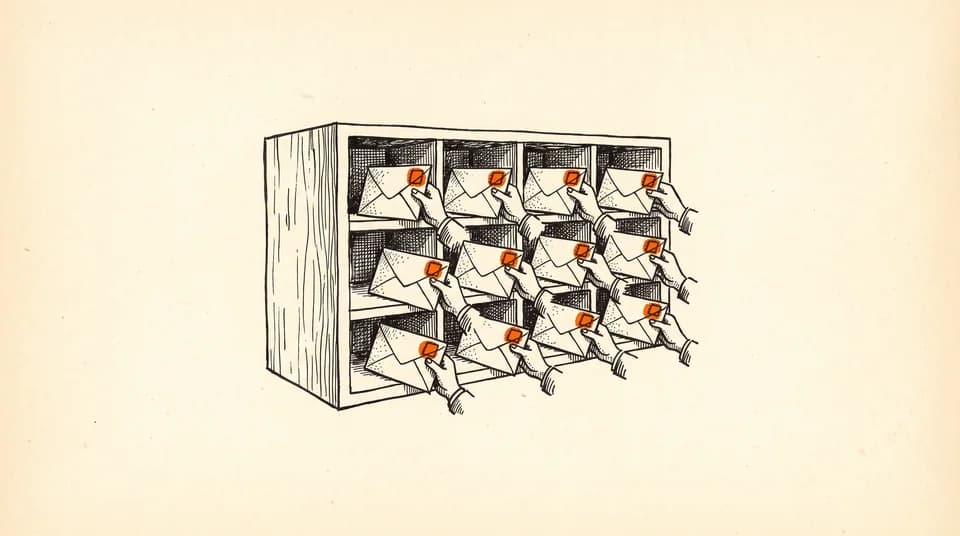
Sending the same email to your whole list feels efficient. It is the opposite. The person who subscribed an hour ago and the person who has bought from you six times do not want the same message, and when you send it to both, you teach Klaviyo's deliverability math that your emails are skippable. Segmentation is not a nice-to-have you get to once the calendar clears. It is the difference between email that feels written for someone and email that feels like a flyer stuffed under a wiper blade.
Why blasting your whole list quietly costs you
A full-list blast looks fine on the surface. You hit a big send number, the campaign goes out, a few orders trickle in. The damage is downstream and it compounds. When you mail people who are not interested in that specific message, they do not unsubscribe (that would be too kind). They ignore you. Inbox providers watch that. Low engagement on a sender trains Gmail and Apple Mail to start filing you under Promotions or worse, and that reputation hit lands on your next send too, including the ones to people who actually wanted to hear from you.
There is a second cost that is harder to see on a dashboard: relevance fatigue. Every off-target email you send is a small withdrawal from the trust a subscriber has in your name in the inbox. Send a first-purchase discount to someone who already bought yesterday and you have not just wasted a send. You have told a good customer you are not paying attention. People remember the brand that emails them like a stranger.
The four segments worth building first
You do not need forty segments. You need four that map to where someone actually stands with your store. Start here, get these clean, and you have covered most of the value before you touch anything fancy.
- New subscribers. They handed over an email but have not bought, or just made a first purchase. They do not know your story, your bestsellers, or why you exist. This is the moment for a welcome that earns the second visit, not a hard discount stacked on a hard discount.
- Repeat buyers. Two or more orders. These people already voted with their wallet. The job here is replenishment timing, the natural next product, and making them feel like regulars rather than leads you are still trying to convert.
- Lapsed buyers. Bought once or twice, then went quiet past your typical reorder window. They are not gone, they are distracted. A win-back that reminds them what they liked (and removes the friction of coming back) does more than a sitewide blast ever will.
- VIPs. Your top tier by spend, order count, or both. They tolerate fewer emails and deserve better ones. Early access, real perks, and a tone that acknowledges the relationship. Treat them like everyone else and you train your best customers to behave like everyone else.
Notice these are behavioral, not demographic. You are segmenting on what people did, because what people did predicts what they will do far better than what zip code they live in.
How to actually build them in Klaviyo
Each of these maps to conditions Klaviyo already tracks once your store is connected. You are mostly stitching together a few definitions and being honest about your own numbers.
Define your reorder window from your data, not a guess. Look at the typical gap between first and second purchase for your store. A coffee brand and a mattress brand do not share a lapsed definition. That number sets the boundary between repeat and lapsed.
New subscribers: profiles that joined the list with zero or one placed order. Keep this tight so the welcome content stays relevant.
Repeat buyers: two or more placed orders, with the most recent inside your reorder window. These people are active and engaged.
Lapsed: at least one order, but no order or site activity past your reorder window. This is your win-back pool.
VIPs: a threshold on lifetime spend or order count that genuinely reflects your top tier. Pick a number that feels like a real cutoff for your store, not a round one you copied from a blog post.
One rule that saves you grief: let people move between segments automatically. A lapsed buyer who orders again should graduate back to repeat the same day. Static lists you update by hand rot fast and start lying to you.
Segment-aware flows are where this gets personal
A campaign is a moment. A flow is a behavior that fires on the right trigger, for the right person, automatically. Once your segments are clean, the flows almost write themselves because the audience tells you what the email should say.
- New subscriber: a welcome series that introduces the brand and nudges a first or second purchase, not a coupon firehose.
- Repeat buyer: a post-purchase and replenishment flow timed to your reorder window, plus the logical next product.
- Lapsed: a win-back that leads with what they bought and why coming back is easy.
- VIP: early access and a thank-you that reads like it came from a person who runs the place.
The same product can show up in all four, and the email still feels personal, because the framing, the timing, and the ask are tuned to where the reader stands. That is what personal actually means in email. Not a first-name merge tag. The right message at the moment it is true.
Where Kaydence fits
This is the part that eats a week if you do it by hand: defining segments, writing four distinct flows in your brand voice, and producing on-brand creative for each. Our team does all four in parallel, segments your audience along the lines your purchase data actually supports, and brings the whole set to you for review before anything goes live.