Process
Your Email Flows Are Set Up. Now What Keeps Them Fresh?
You launched your flows, celebrated for a day, and moved on. That's normal. But flows aren't furniture. You can't place them once and walk away. Here's how to build a real maintenance rhythm before your best-performing automations quietly go stale.
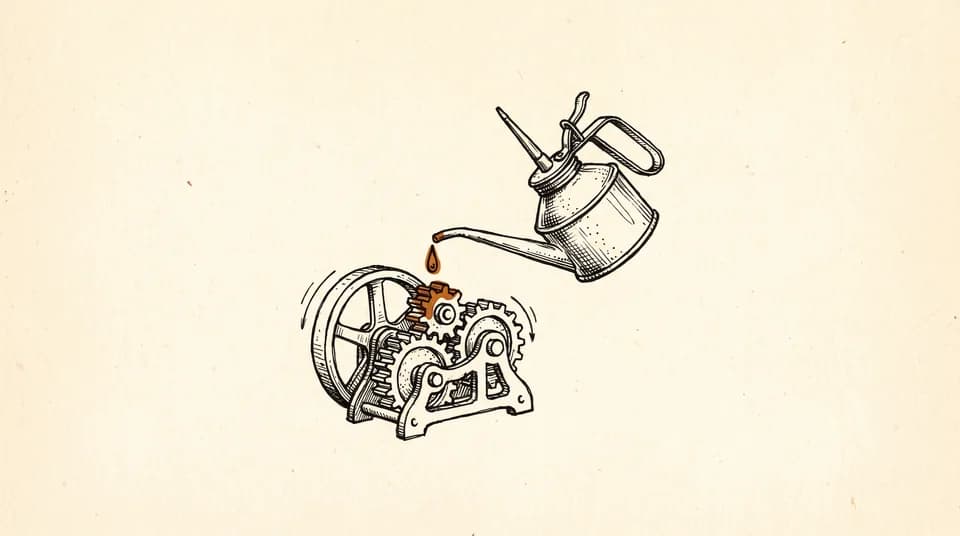
Most DTC brands treat Klaviyo flows like a construction project. There's a defined finish line - flows live, job done. The problem is that the world your flows were built for keeps changing. Your product catalog evolves. Your brand voice sharpens. Klaviyo ships new features. Seasonal context shifts. What performed well six months ago might be pulling its weight on inertia alone right now, not actual relevance.
Why Flows Go Stale Without Anyone Noticing
Flows are invisible by design. They run in the background, trigger automatically, and don't demand attention the way a campaign send does. That invisibility is the whole point - but it also means degradation sneaks up on you. A product discontinued six months ago is still featured in your welcome series. Your abandoned cart copy references a free-shipping threshold you changed in January. Your post-purchase sequence recommends a collection that no longer exists. None of this breaks anything loudly. It just quietly erodes trust and conversion, one email at a time.
Build a Flow Maintenance Calendar (And Actually Use It)
The simplest approach is three review tiers, each with a different cadence and depth.
- Monthly - quick pass: Check that all product references, images, and links are still accurate. Update any copy that references a current promotion, season, or inventory that's changed. This can be a relatively quick pass if your flows are well-organized.
- Quarterly - copy and creative refresh: Re-read every email in your core flows (welcome, abandoned cart, post-purchase, winback) with fresh eyes. Does the copy still sound like you? Is the offer still competitive? Swap out any hero images that feel dated. Test one subject line variant per flow.
- Annually - structural review: Question the flow logic itself. Are the splits and conditions still reflecting how your customers actually behave? Has a new customer segment emerged that deserves its own branch? Are the send delays still the right calls? This is also the time to layer in any new Klaviyo features you haven't used yet.
The Specific Things That Go Out of Date Fastest
Not everything in a flow ages at the same rate. Some content is nearly timeless - a story about why you started the brand, a how-to guide for a core product. Other elements have a short shelf life and need a faster refresh loop.
- Discount amounts and shipping thresholds - these change more often than people remember to update their flows
- Product recommendations - best-sellers rotate, and nothing looks worse than recommending something that's out of stock or discontinued
- Social proof references - if you're quoting a review count or a press mention, those get stale fast
- Seasonal language - a post-purchase email that calls something "the perfect holiday gift" in March is a tell
- Founder or team photos - if you've rebranded or the team has changed, these can feel off
- Urgency copy tied to inventory - "selling fast" language that was written during a genuine shortage doesn't belong in a permanent flow
How to Actually Prioritize When You're Stretched
If you're a lean team - which most DTC brands are - you can't overhaul everything every month. So prioritize by volume and stakes. Your welcome series touches every new subscriber. Your abandoned cart flow runs constantly. Those two get attention first, always. Your winback flow, by contrast, is talking to an audience that's already cold - a slightly stale email there costs you less than a stale email in the welcome series costs you.
A useful rule of thumb: rank your flows by the volume of contacts who move through them in a given month. Refresh in that order. The high-traffic flows earn the most maintenance time, full stop.
Treat Every Catalog Change as a Flow Trigger
One habit that prevents most of the rot: tie internal product and pricing changes to a quick flow-check checklist. Any time you launch a new product, retire an old one, change a price, run a new promotion, or rebrand - someone on your team is responsible for scanning the flows for affected references before that change goes live. This sounds obvious. Almost no one does it systematically. The reason is structural: catalog and email ops sit in different tools, owned by different people, with no shared trigger between them. So the flows drift and nobody owns the gap.
It helps to document your flows in a shared place - even a simple spreadsheet listing each flow, its purpose, the products or offers it references, and the date it was last reviewed. That one document pays for itself fast.
When to Rebuild Instead of Refresh
Sometimes a flow has aged past the point of patching. Signs that a rebuild makes more sense than a refresh: the logic was built for a product catalog that no longer exists, the brand voice has shifted significantly since the original copy was written, or the flow was built before you understood your customer segments well enough to personalize properly. Rebuilding feels like a bigger lift, but retrofitting a badly structured flow can actually take more time than starting clean - and the result is usually worse.
This is also when it is worth asking whether your flows reflect your brand as it exists today, or the version of your brand that existed when you first built them. That gap is the problem our team is built to close. We audit what is live, rewrite what has drifted, and rebuild the creative against your current products and positioning.
The Mindset Shift That Makes This Sustainable
Stop thinking of flow maintenance as a chore and start thinking of it as an investment. Every hour you spend keeping a high-volume flow current is working in the background every day after that. A sharper welcome series doesn't just convert better on launch day - it converts better for every new subscriber, indefinitely. The compounding effect on that is real, and it runs in the background without any additional effort. Flows are the closest thing to always-on email marketing you have - but only if you keep them honest.